Friedrich Becker (1922-1997)
Friedrich Becker, born in 1922, was a German jeweler and designer widely recognized as a pioneer of kinetic jeweler. Born near Herdecke, Germany, he initially trained as a machine builder and studied aeronautical technology before World War II. After the war, Becker shifted his focus to goldsmithing, completing an apprenticeship and studying at the Werkkunstschule Düsseldorf, where he later became a professor from 1964 to 1982.
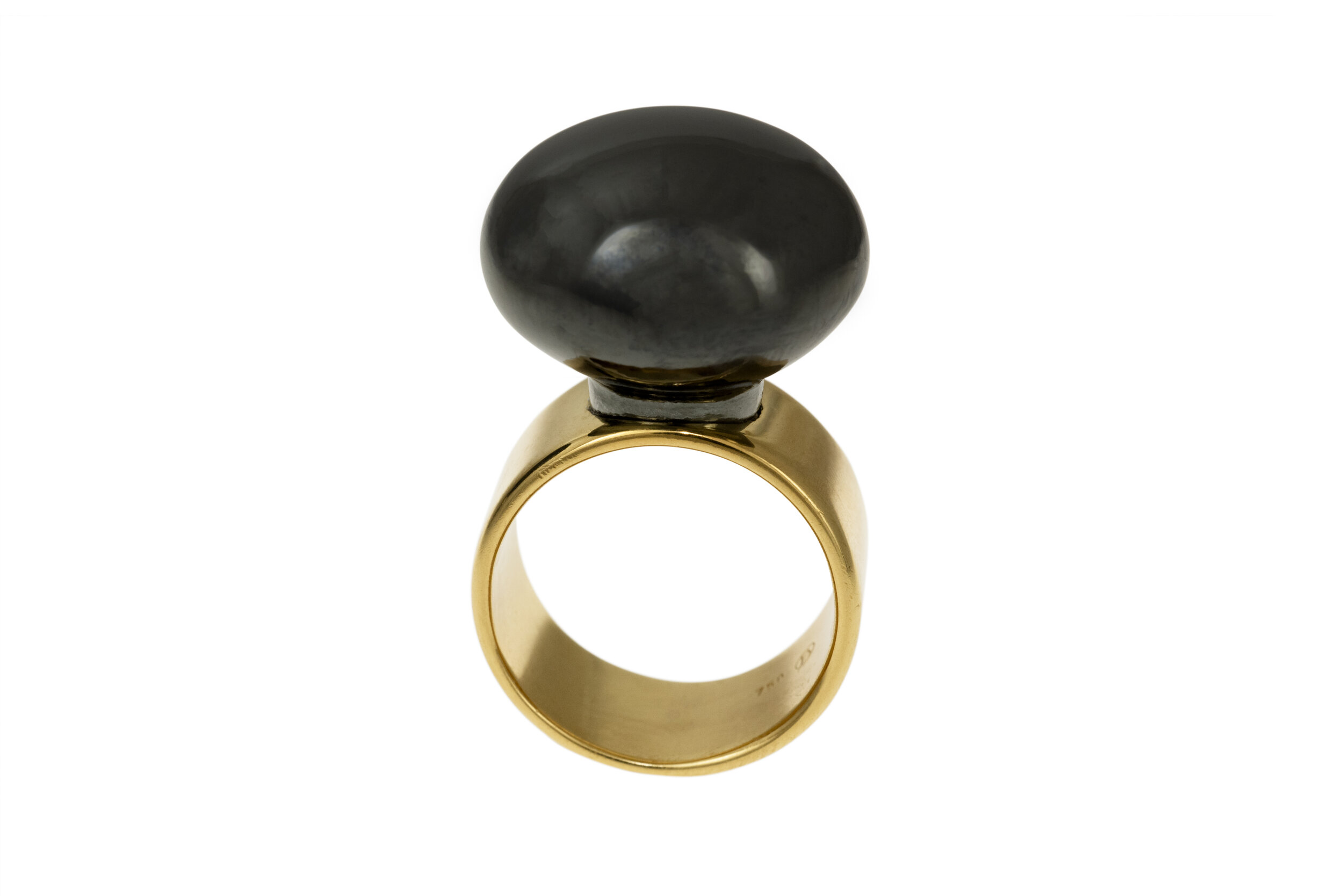
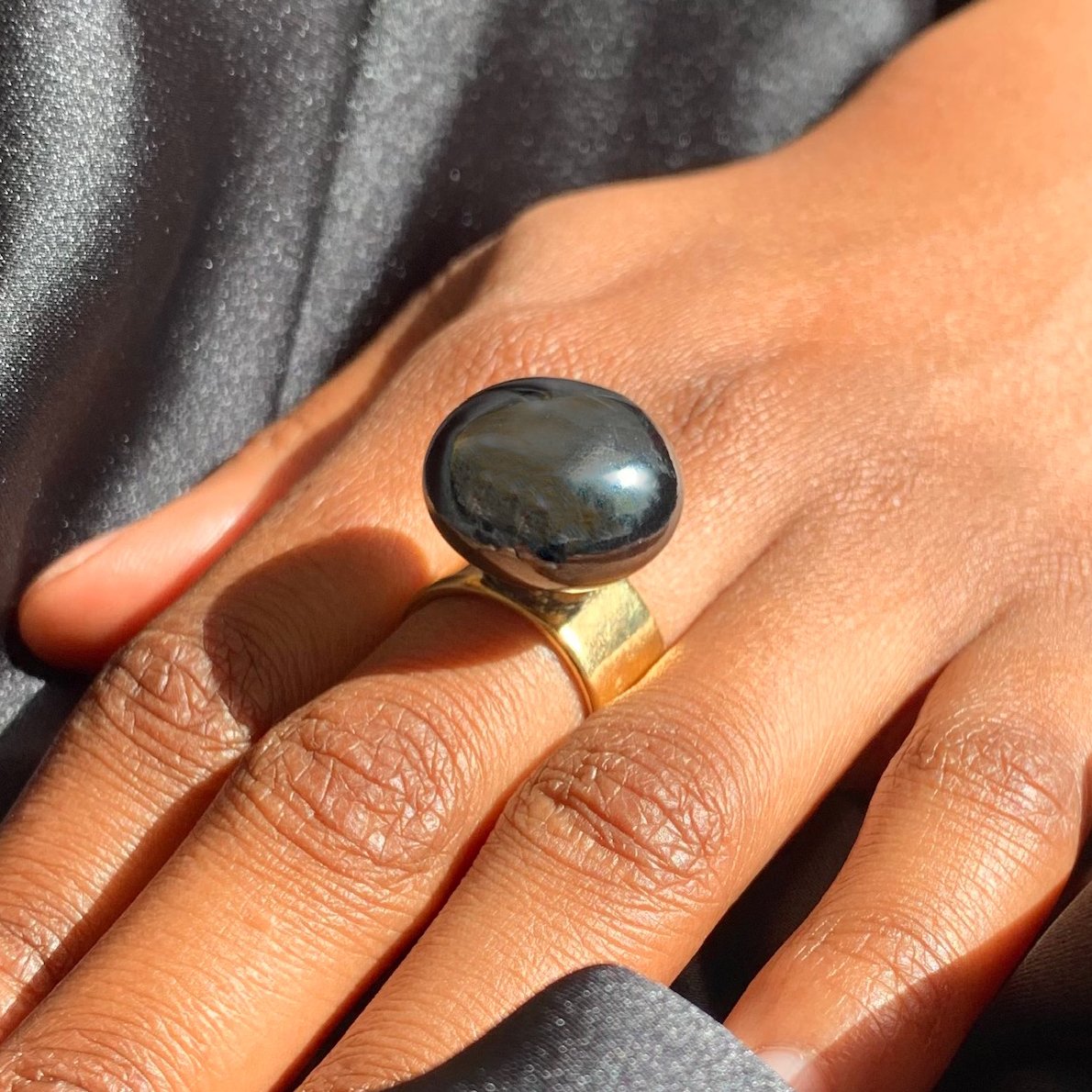
Combining his technical and engineering background with traditional craft, Becker created innovative jewelry that incorporated movement, mechanical precision, and variability, allowing wearers to interact with pieces in unique ways. His early works, such as the 1956 “Two Way Ring,” introduced convertible elements, while later designs incorporated ball-bearings, pivot points, and interchangeable gems. Becker’s use of non-traditional materials like stainless steel and synthetic stones challenged conventional notions of jewelry, emphasizing form, movement, and conceptual artistry alongside ornamentation.
Over his career, his pieces gained international recognition, winning awards such as the Bavarian State Prize in 1959 and were exhibited in major galleries and museums. His influence extended through teaching, shaping a generation of designers, and his legacy continues through the Friedrich Becker Prize, awarded to emerging jewelry designers. Becker’s work remains celebrated for bridging craftsmanship, engineering, and art, transforming jewelry into interactive, kinetic, and wearable sculptures.